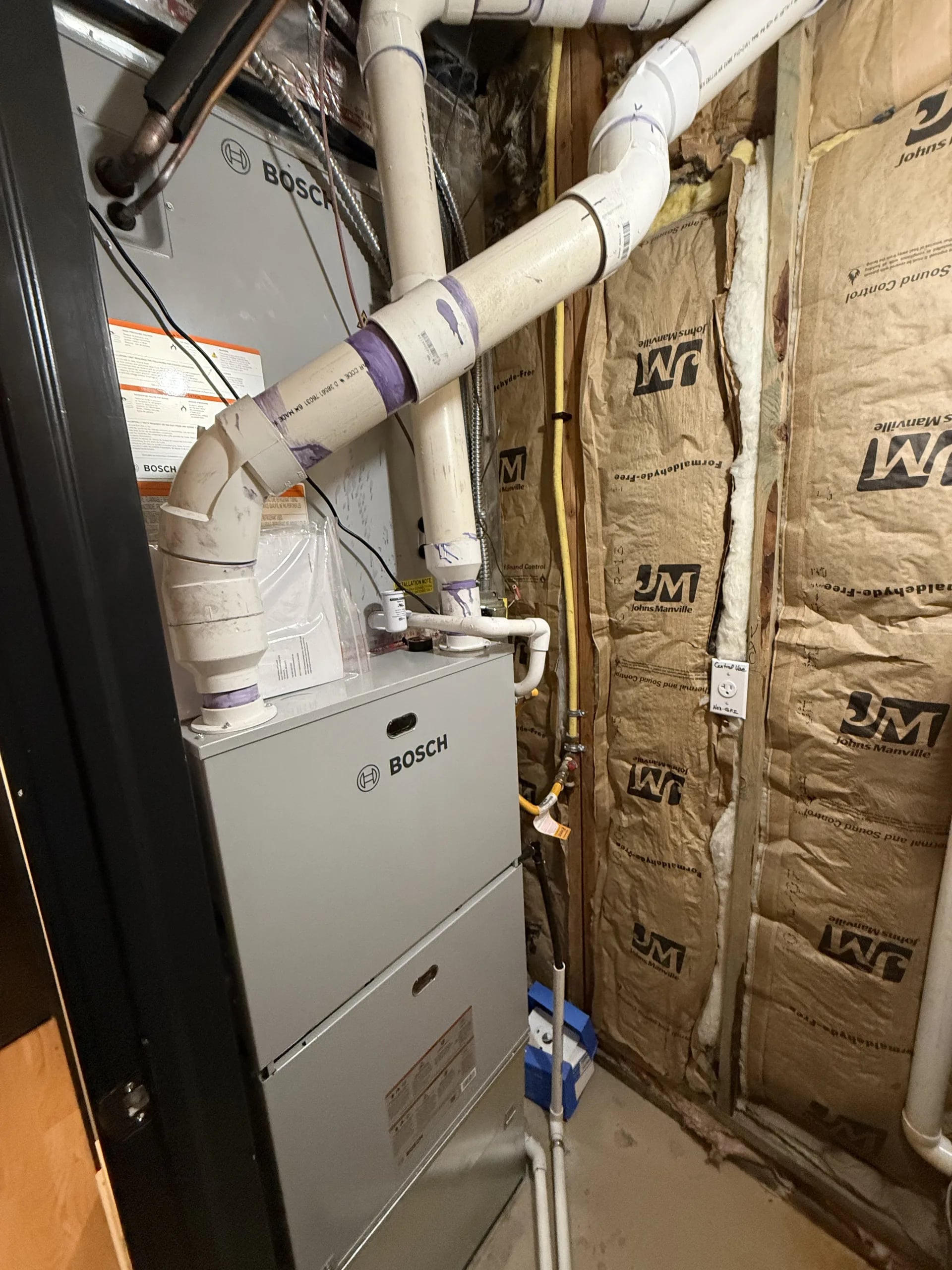
Four phone photos are usually enough for us to price a furnace replacement without a visit. Take them in this order.
1. The furnace and the room around it
Stand back far enough to get the whole furnace, the pipes leaving the top and whatever sits beside it, such as a water heater. This one shot shows the venting, the gas line, the ducts and how much room there is to work.
2. The rating label
It's a sticker inside the lower door with the model and serial numbers. The model gives the size and type, and the serial number usually shows the year it was made. If the door doesn't lift off easily, skip it.
3. Where the vent pipes leave
White PVC pipes mean a high-efficiency furnace. A single metal flue means a standard-efficiency furnace, 80% or an older one, often shared with the water heater. That difference changes the price more than almost anything else.
4. The repair ticket
If a tech has been out, photograph the diagnosis and the quote. Then the price is built on what they found, and we can see whether the furnace was shut off for safety.
How to send them
Send the photos and you'll get a written replacement price back, or a few questions if something is unclear. If you'd rather have someone look in person, book a visit.
If you haven't decided yet, run the repair-or-replace calculator first.
Common questions
Do I need to take the furnace door off?
Only the lower door, and only if it lifts off easily. The rating label is usually inside it. Leave the burner compartment closed.
Does sending photos book a visit?
No. We look at the photos and follow up with a price or a few questions. You can book a visit separately.